The Salvation Series - Part 8: The Salvation of the Body – Relationships
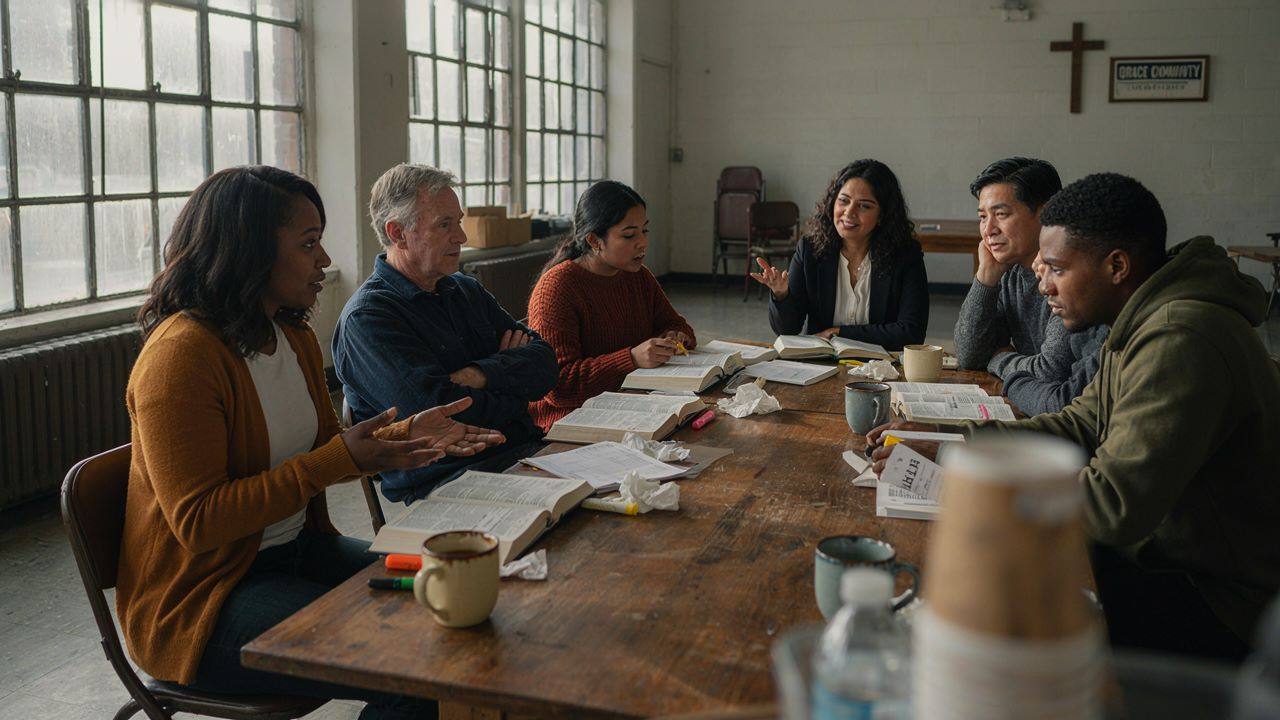
Praise God for another wonderful day as we conclude our series on Salvation! In this final installment, I want us to discuss relationships, because healthy relationships are a vital part of the salvation package.
When mankind became spiritually dead due to sin, humanity was spiritually displaced from standing before God (Genesis 6:3). Mankind could no longer enjoy uninterrupted fellowship with the Creator. That is why, when God came to fellowship with man in the cool of the evening after Adam had sinned, God asked, "Where art thou?" (Genesis 3:9)—not because God was geographically lost, but because man was no longer in his rightful spiritual position.
God deeply desires a relationship with humanity. That is why He went to such great lengths to restore that fellowship through Jesus Christ. In the same way, because human beings are created in God’s image and likeness, we were created as social beings meant to interact with one another. When God saw that man was alone, He said, “It is not good that the man should be alone; I will make him an help meet
partner
for him.” (Genesis 2:18).Notice what happened immediately after man sinned and broke his relationship with God: human-to-human relationships began to break down as well. Adam’s first instinct was to blame his wife—and indirectly blame God—saying, "The woman whom thou gavest to be with me, she gave me of the tree, and I did eat" (Genesis 3:12).
Though Adam's words might sound simple on the surface, they planted a seed of discord that quickly multiplied. In the very next generation, we see the tragic result when Cain killed his brother Abel out of envy (Genesis 4). This breakdown in human relationships has spiraled down through the centuries to the present day—to the extent that even marriages intended to last "till death do us part" sometimes crumble within a year.
In establishing the Old Covenant, God gave the Ten Commandments to help govern relationships. The first four commandments guide how man should relate to his heavenly Father, the fifth addresses honor for earthly parents, and the remaining five instruct how people should relate to one another (Exodus 20).
Yet, keeping a list of rules could not solve man’s core problem. Because fallen humanity was spiritually dead, people knew what was right but lacked the spiritual power to execute it. God is a Spirit, and we can only truly commune with Him through our spirit (John 4:24). This is why attempts to find or analyze God purely through human logic or science yield futile results. God created man with a spirit to interact with the spiritual realm (God) and a body to interact with the physical realm (people)—making humanity a truly unique creation.
God sent His Son, Jesus Christ, first to mend our relationship with Himself, and second to make it possible for us to build lasting relationships built on genuine love. When a person is born again, they receive a recreated spirit—a spirit of power, love, and a sound mind (2 Timothy 1:7).
Without love in a relationship, there is no genuine sacrifice. Where there is no mutual sacrifice, conflict and breakdown are inevitable. Love enables us to extend grace and forgive each other’s mistakes, knowing that no human on earth is perfect. While we should forgive others, this does not mean we must remain in abusive or destructive relationships. However, when it comes to marriage, that is a sacred covenant. That is why it is essential to be spiritually vigilant before entering marriage and to be fully committed to staying the course. It is far better not to enter a marital covenant than to enter one without the intent to honor it to the end.
We must also realize that the purpose of a relationship is far more important than the emotions within it.
Emotions naturally ebb and flow, but when the underlying purpose of a relationship is prioritized, that relationship stands the test of time. God made Eve as a helper to partner with Adam in building a godly world (Genesis 2:18). When Adam allowed emotions to override purpose, he followed Eve into disobedience—even though Scripture notes that Adam himself was not deceived by the serpent as Eve was (1 Timothy 2:14).
Always ask yourself: What is the purpose of this relationship? Define your relationships intentionally. Jesus modeled clear boundaries in His relationships on earth:
1. The Crowds/Disciples: Many followed Him and gathered whenever He taught.
2. The Twelve: A smaller group who lived alongside Him and traveled with Him.
3. The Inner Circle: Peter, James, and John—three close confidants to whom He revealed His most sacred experiences (such as the Transfiguration).
We must choose our relationships deliberately rather than letting circumstances dictate them. (The exception is our biological family, which is divinely assigned by God.)
Speaking of family, there are two realms of relationship: your spiritual family and your earthly family. As profound as it sounds, Jesus prioritized His spiritual family when He said, “For whosoever shall do the will of my Father which is in heaven, the same is my brother, and sister, and mother.” (Matthew 12:50).
Earthly relationships are temporary, but the spiritual family of God endures for eternity! The defining characteristic of God's family is unconditional love. Jesus said, “By this shall all men know that ye are my disciples, if ye have love one to another.” (John 13:35).
This is why believers in the early Church were called "Christians"—because their evident love made them look like Christ.
Jesus also engaged in intentional outreach relationships: He was known as a friend of sinners, yet His purpose was clear—to save them. You may form friendships to help lift someone out of a destructive lifestyle, but you must ensure your character and faith are strong enough to influence them, rather than allowing them to pull you down. If you find yourself in a toxic association that constantly pulls you into compromise, the wisest step is to pull back. The scripture says, “Make no friendship with an angry man; and with a furious man thou shalt not go: Lest thou learn his ways, and get a snare to thy soul.” — (Proverbs 22:24–25).
Every relationship involves an exchange of character and influence. A common mistake people make is desiring a relationship purely for what the other person has (resources) while ignoring who they are (character). This leads to hypocrisy rather than genuine loyalty. Over time, the partner with the stronger influence will shape the character of the other—for better or for worse. If two people have strong, opposing values without a willingness to align with God's Word, constant friction will result. This principle of influence is clearly seen in how parents shape the character of their children. An example can be seen in the family of Isaac with Rebekah, and their relationship with their sons, Esau and Isaac. Jacob loved Esau while Rebekah loved Isaac. This resulted to each parent’s character influencing the son they loved more.
However, no one has a greater positive influence on character than God. God does not change, but as we spend time in His presence, we are changed to be more like Him - Love! Because God is love (1 John 4:8), a believer who fellowships with God daily will naturally become more loving, patient, and forgiving toward others. This is why daily fellowship with God is the foundation of every healthy human relationship. A relationship devoid of God’s love easily degenerates into a selfish or transactional dynamic where one person exploits the other.
There are many types of relationships: parent-child, peer-to-peer, professional, civic, and spiritual. Because these overlap in daily life, managing them requires setting godly priorities—placing your walk with God and His family first, just as Jesus demonstrated.
In conclusion, healthy relationships are an essential fruit of salvation. God takes our relationships seriously, which is why He provided the cure for broken fellowship through the cross. Relationships are built between people, but the devil constantly seeks to sow seeds of discord—projecting negative thoughts, offense, and misunderstandings to break people apart. That is what Satan tried in Eden, and he uses the same tactics today.
Overcoming the enemy's traps requires more than fleeting human emotions; it requires the help of the Holy Spirit and a commitment to walk in love. Let us cultivate daily fellowship with God and intentionally walk in love with one another. Have a blessed day!
Today’s Scripture Reading:
Matthew 22, Genesis 2–3
Prayer for Salvation
Dear Lord, I believe Jesus died and rose again for me. Forgive me of all my sins and come into my life. I confess Jesus as my Lord and Savior. Wash me with your precious blood. Thank You, Jesus. In Jesus' name, Amen.
Congrats! If you prayed this prayer in faith, your status has changed—you are officially a child of God!